Kweichow Moutai: Impeccable Pedigree

This little river town is home to Kweichow Moutai, one of China’s most valuable companies. The success of this state-owned enterprise from a mountainous region in Guizhou, one of China’s poorest provinces, is nothing short of a miracle. It distils a baijiu liquor famous for its sauce-aroma flavour (酱香味道) and coveted across China. It was the exclusive drink at the banquet celebrating the founding of the PRC in 1949 and has been used ever since to toast visiting dignitaries, including US President Richard Nixon.
Making Moutai
I visited Maotai Town (贵州茅台镇) last month to learn more about Moutai’s heritage and place in Chinese culture. The first thing you notice when you arrive is the smell of Daqu (大曲), a fermenting sorghum mash, wafting down from the distillery upstream. The whole town smells of yeast, like Marmite! Air is trapped in the valley by the mountains, creating a unique microclimate and microbial ecosystem. The Chishui River (赤水河), which flows through Maotai, is an upper tributary of the Yangtze River, which descends from the mountains of Yunnan. Its name comes from the reddish hue it turns when heavy rains lift it to mix with the red terrigenous sedimentary beds (丹霞地貌) upstream. These factors create a unique ‘terroir’ which influences the liquor’s taste.
And what does Moutai taste like, exactly? This is a profound question upon which any number of connoisseurs have expounded (see here, here and here, for example). Scholars devote themselves to its analysis, too, in papers with titles like “Characterization of perceptual interactions among ester aroma compounds found in Chinese Moutai Baijiu by gas chromatography-olfactometry, odour Intensity, olfactory threshold and odour activity value”. This more straightforward description might be easier to swallow: “sauce aroma varieties of Baijiu are noted for their rich, umami, soy sauce notes, which offer a more traditionally earthy fermented flavour.”
In my humble opinion, it’s an acquired taste. But that doesn’t matter because perception is everything. Moutai confers unparalleled social proof. The surest way to prove your bona fides and curry good favour in China is to come to dinner with a bottle of Feitian Moutai (飞天茅台), the company’s flagship liquor.
Liquor has been distilled in this region for over two thousand years, with grain-based liquors becoming popular in the Tang and Song Dynasties (618-1279 AD). Sauce-aroma baijiu was created when Sichuanese distillation techniques for strong-aroma baijiu (浓香味道) were blended with northern techniques for light-aroma baijiu (清香味道). The earliest record of distillation in Maotai Town itself dates from 1704, with the processes used today honed in the 19th century. After the founding of the People’s Republic in 1949, the three leading distilleries were nationalised and merged to form the predecessor of today’s company.
There is an excellent overview of the production process in this article, which I asked ChatGPT to help me summarise:
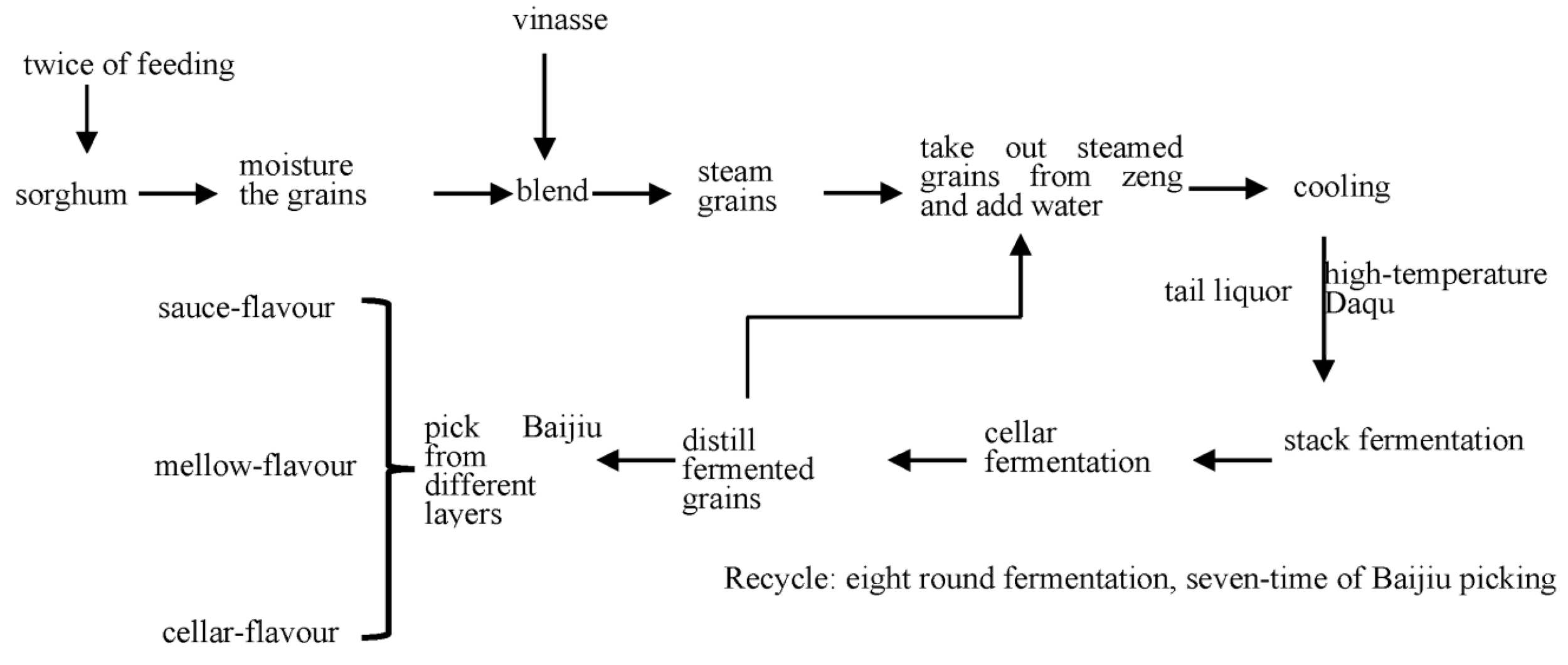
The production begins with mixing fermented grains, predominantly sorghum, with Daqu and water, followed by high-temperature stacking and anaerobic fermentation in cellar pools. Sorghum's starch, tannin, protein, and fat content significantly influence the Baijiu's flavor and yield. During fermentation, microorganisms like Rhizopus and Mucormycosis convert starch into sugars, which then ferment into ethanol, lactic acid, esters, and other flavor compounds. Tannins in sorghum play a crucial role in flavor development, inhibiting bacteria and contributing to distinct flavors like smoky and soy sauce.
Proteins in sorghum are metabolized into amino acids, peptides, and organic acids, integral to the Baijiu's sauce aroma. The Maillard reaction between amino acids and reducing sugars further contributes to the unique aroma profile. The brewing environment, especially in the Chishui river basin, is pivotal due to its water quality, soil composition, and microclimate, fostering a diverse microbial community essential for fermentation.
Production involves following the "12,987" process, i.e., “one production cycle per year, twice feeding, nine times cooking, eight rounds of fermentation, and seven times of Baijiu collection”. This includes multiple cycles of feeding, cooking, fermentation, and distillation. Daqu, primarily wheat-based, introduces essential microorganisms and enzymes for flavor formation. Storage in pottery jars or stainless-steel tanks influences the Baijiu's maturation, with factors like container type, method, and duration impacting the final taste and quality. These technical and chemical aspects collectively define the distinctive character of Sauce-aroma Baijiu.
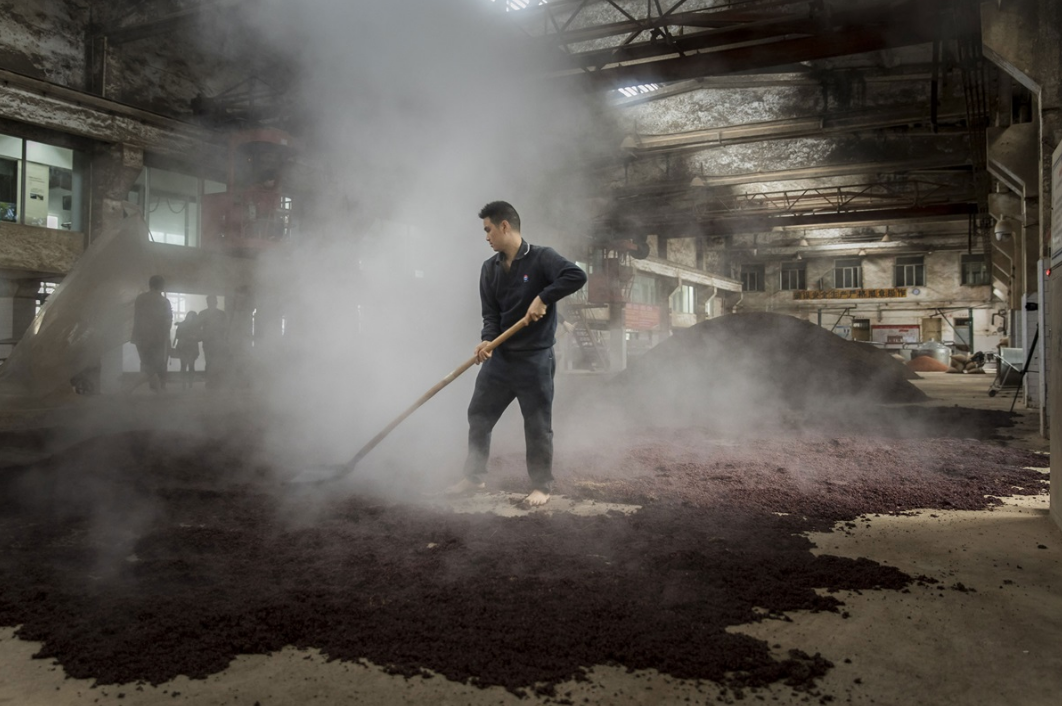
Production takes at least five years, passing through no less than 30 processes and 165 different procedures. Following the ageing process, the basic Moutai distillates will go through an elaborate blending process. Master blenders, relying on their personal tastes and using techniques passed down over hundreds of years, combine anything from a few to dozens of basic distillates in search of the ultimate balance and depth of flavour. It is still an artisanal process, even at today’s industrial scale.
Moutai’s Red Pedigree:
Besides its taste, Moutai boasts a proud red pedigree. The Maotai Liquor Culture Museum features exhibits on liquor distillation and consumption in China, slowly making the case that Moutai is the inheritor and culmination of thousands of years of rich history and tradition. In the modern era, a twist of fate during the Long March saw the Chinese Communist Party’s Red Army cross the Chishui River at Maotai Town in 1935 in a final desperate attempt to escape pursuit by the Nationalist Army. The Red Army soldiers used the 53-proof liquor to sterilise their wounds and clean their feet, coming to cherish it in the difficult days ahead. This was Chairman Mao Zedong’s first operation after taking control of the Red Army at the Zunyi Conference, and the successful crossing at Maotai Town has become part of his legend.
After the founding of the PRC, between 1952 and 1989, with the personal involvement of Premier Zhou Enlai, five National Liquor Appraisal Conferences were convened to classify and evaluate baijiu from around the country, creating a system similar to the French Appellation d'origine contrôlée. From this, eight liquors were chosen as the best in the country (中国八大名酒): Moutai, Wuliangye, Luzhou Laojiao, Fenjiu, Gujing Gongjiu, Xifeng Jiu, Jiannanchun and Dongjiu. This official imprimatur still sets these eight brands apart today.
The Business of Moutai:
Moutai was modernised under the leadership of former Chairman Mr. Ji Kelang (季克良), a fifty-year veteran who took Kweichow Moutai public on the Shanghai Stock Exchange in 2001. Moutai has since grown its revenues from CNY 628 million in 1998 to CNY 140 billion in 2022 - a 24% CAGR - and its net income from CNY 147 million to CNY 71 billion - a 28% CAGR. There has been virtually no increase in the share count since the IPO.
None of this was pre-ordained. In fact, the decades after China launched its Reform & Opening movement saw a series of baijiu companies take the industry crown one after the other, as one would rise and others would stumble and fall. Competition was intense and issues with quality were all too common. Somehow, Moutai’s management steered their way through without major incident to become the industry’s undisputed champion. I highly recommend this article if you want to learn more about this period.
It is remarkable that a luxury brand of Moutai’s pedigree has been built and sustained by a state-owned enterprise. These are not folks with fancy MBAs, lucrative stock options or who otherwise flaunt their wealth. I recorded this short clip of former Chairman Ji so you can hear his thick accent. What motivated Ji and his colleagues? I can only imagine it was the pride they earned preserving the heritage entrusted to them. Of course, others were not so pure-minded - I’ll return to that later.
The difficulty of producing Moutai makes production hard to scale. Supply is, therefore, perenially limited and it is hard to buy Feitian Moutai even if you can afford it. During my visit to Maotai Town, I was given special permission to buy a set of two 50ml bottles for RMB358 from one of the company’s directly owned stores (i.e. not from a distributor). I had to produce identification to verify my identity to ensure I wasn’t double-dipping. The serial numbers of the bottles were recorded and entered into an online ledger to prove their authenticity should I re-sell them. The experience was more akin to buying a Birkin handbag from Hermes than a trip to the liquor store.
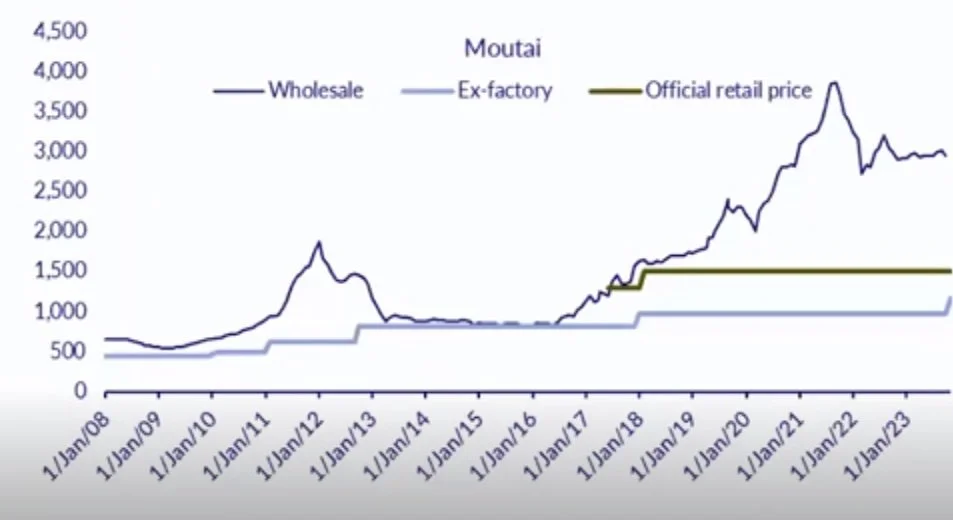
To grow beyond their provincial roots, China’s baijiu companies relied on distributors to help them sell nationwide - a system still in practice today. However, high-end baijiu’s scarcity creates a premium between the official ex-factory price (出厂价) and the market wholesale price, amplifying the inventory cycle. When times are good, distributors buy as much liquor as possible and hoard it, betting they can sell it for more later. However, when times are bad and the premium shrinks, they dump their inventory to raise cash. This premium is, therefore, the single most important variable to understand Moutai and its peers’ earnings cycle.
The worst cycle (to date) followed the anti-corruption campaigns which Xi Jinping launched after he became Party General Secretary in 2012. You can see the havoc this boom-to-bust cycle wrought among distributors through the financials of Silver Base Group Holdings (886 HK), which distributed Wuliangye, China’s second most esteemed baijiu. Silver Base is in liquidation and will soon be delisted.
Moutai’s sales stalled from 2013-2016, during which time there was virtually no premium on its wholesale prices. This was not such a bad outcome: other baijiu distillers saw retail prices fall below wholesale prices as demand collapsed. My understanding is that to preserve their precious relationship, Moutai’s distributors simply bought what they were asked to buy and paid what they were asked to pay.
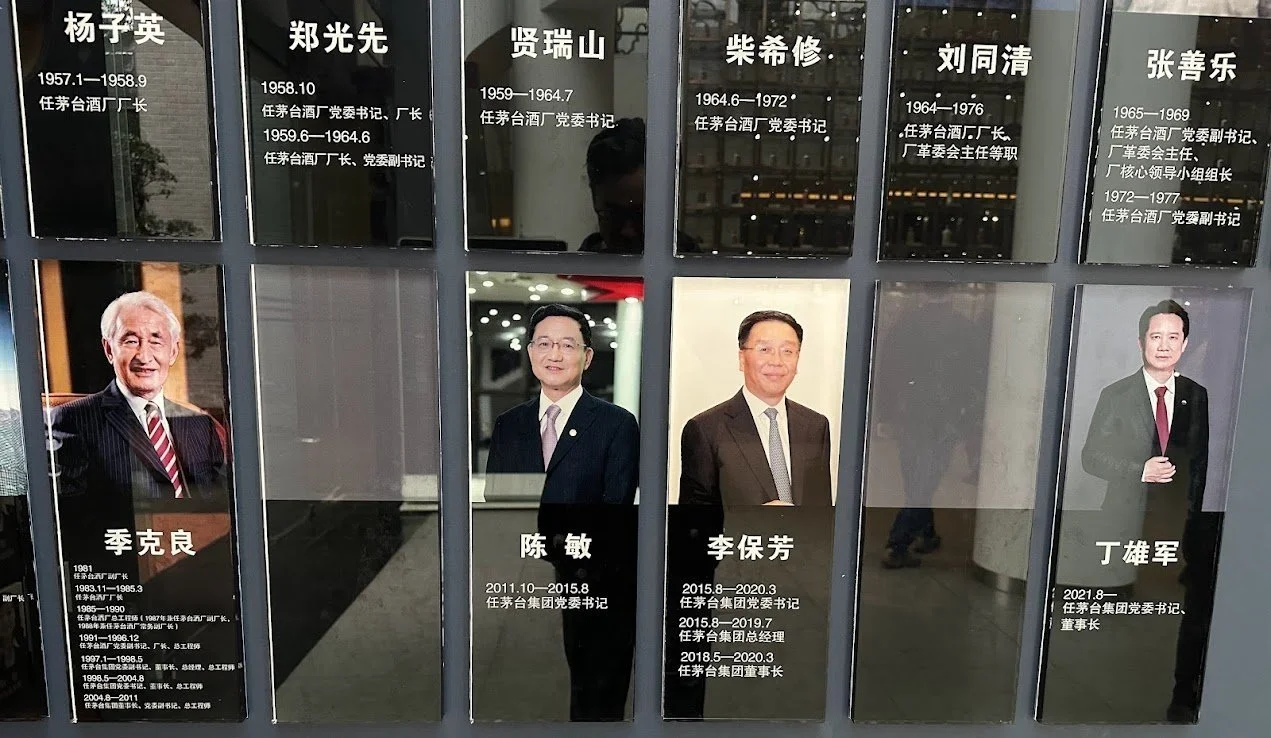
Indeed, securing a Moutai distributorship is a licence to print money, which unfortunately engenders corruption. Two of Moutai’s last six Chairmen - Yuan Renguo (袁仁国) and Gao Weidong (高卫东) - were jailed for taking bribes from parties eager to become distributors. In this photo I took at Moutai’s official museum, you can see that they have literally been stricken from the company’s records. It is commendable how seriously the company and authorities treat these crimes.
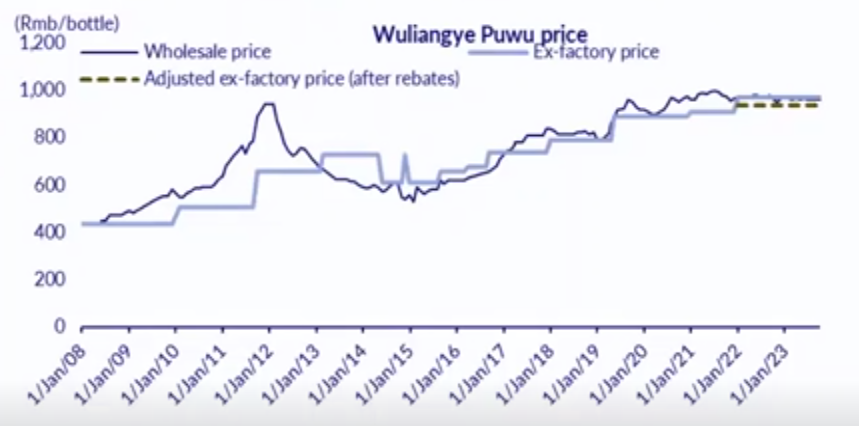
After a strong upcycle from 2017 to 2021, the Baijiu industry is again in a downcycle, working through its excess channel inventory. Clearance is so far less ‘disorderly’ than last time, and most major brands have not cut their wholesale prices. However, they are offering cash rebates instead, as you can see in this chart depicting the situation for Wuliangye.
Moutai Direct
The obvious question is, why can’t Moutai raise prices to capture more of the scarcity premium itself? The answer is that the government cares about inflation and consumer welfare, and does not want Moutai to create a price umbrella for other distillers to exploit. Whenever Moutai raised prices in the past, distributors raised them even more. Competitors followed too. Moutai’s price is national service and is a heavy cross to bear: it must leave hundreds of billions of dollars of value on the table.
(There are benefits, though. The Guizhou provincial government, Moutai’s largest shareholder, offers the company privileged treatment, such as protection of its raw material supply. They know not to kill the goose which lays the golden eggs.)
Moutai’s executives are not blind to their conundrum and have spent the last decade working on three fixes. First, they took back control of their sales channels. The number of domestic distributors was reduced from a peak of 2,979 in 2017 to 2,084 in 2022. Expert reports I’ve read suggest standards have been tightened, inspections are more regular, and there are no appeals for infringements.
Moutai has also partnered with national chains like Pinduoduo, RT-Mart, Carrefour and Costco, which will not speculate, withhold supply or charge above Moutai’s official retail price (which are higher than the ex-factory prices but still substantially below market prices).
Next, Moutai began bundling its ultra-premium Feitian Moutai (seen in the foreground of the picture below) with less premium ‘Series Wines’ (系列酒), demanding distributors who want the former to buy the latter too. Sales of Series Wines have grown from CNY 935 million in 2014 to CNY 16 billion in 2022, rising from three per cent of overall sales in 2014 to thirteen per cent in 2022.
Strategically, the Series Wines allow Moutai to offer products across a range of price segments. They also give it a means to itself exploit the benefit of the price umbrella created by Feitian Moutai. Series Wines’ ASP has risen from CNY 150k / tonne in 2016 to CNY 530k / tonne thanks to premiumisation and new products with higher ASPs. As a result, Series Wines’ gross margin has increased from a low of 52.9 per cent in 2015 to 77.2% in 2022.
In the same way, Moutai has introduced limited-edition packaging for its ultra-premium lines. Themes like the twelve animals of the Chinese zodiac allow it to charge higher ASPs for the same liquor. Smaller bottles like the ones I purchased also sell for more on a per volume basis.
Then, Moutai built a Direct Sales channel to sell directly to consumers at official retail prices. Since disclosure began in 2015, Direct Sales have risen from six per cent of sales to forty per cent in 2022. In fact, Direct Sales grew twenty-four per cent in 2022 while Wholesale sales declined by seven per cent, as clear an indication of Moutai’s strategic priorities as you’ll ever get. Moutai even launched its own online channel called iMoutai in March 2022. It grew so fast that by the end of the year, it already comprised ten per cent of overall 2022 sales.
The combination of these efforts - premiumisation and Direct Sales - has raised the ASP of Moutai liquor from CNY 1.60 million / tonne in 2016 to CNY 2.85 million / tonne in 2022. Over that time, Moutai liquor’s gross margin rose from 93.50 per cent to 94.19 per cent. This might not sound like much, but it is the difference between selling at a 15.4x and a 17.2x markup to COGS. (To put this in context, Diageo’s 60% gross margin implies just a 2.5x markup to COGS.)
With all these elements in place, Moutai can better control the final price consumers pay and avoid gouging by distributors. It can finally play the ace up its sleeve: raising the ex-factory price to directly take back some of that money left on the table. It did exactly this in November, raising prices for the first time in six years. The ex-factory price of a 500ml bottle of Feitian Moutai was increased by twenty per cent from CNY 969 to CNY 1,169, with other products following suit. The official retail price will remain at CNY 1,499 per bottle, however, so consumers who are able to buy direct from Moutai will feel no difference.
COMPARING MOUTAI TO PEERS
The quickest way to fall out of love with Western spirits companies like Diageo (sorry Nick Train!) is to compare their fundamentals with Moutai - or just about any Chinese Baijiu distiller, for that matter.
The best description of Diageo I’ve heard is that it is an index of Western consumers’ ever-changing alcohol preferences, moving with them as they flit from whiskey to tequila to vodka to the next new thing. But none of Diageo’s brands comes close to matching Moutai’s heritage and prestige. Diageo’s business model is built around volume and availability, not scarcity. Comparing the two liquor companies is akin to comparing Hermes to Coach.
The numbers bear this out: over the last twelve months, Moutai demonstrated more pricing power (ninety-two per cent overall gross margin vs. sixty per cent); spent less on SG&A as a percentage of gross profits (ten per cent vs. thirty per cent); and had zero expensive intangible assets on its balance sheet from overpriced M&A (does anyone besides George Clooney remember the USD 1 billion Diageo spent on Casamigos Tequila?). Moutai could, therefore, earn a fifteen percentage point higher return on net tangible operating assets (thirty-seven per cent vs. twenty-two per cent). And it had no debt!
Valuation
Moutai and its peers fell to generational lows following Xi Jinping’s anti-corruption campaigns. At its nadir, I’ve heard that Moutai traded for less than the market value of its inventory.
As the cycle ended and growth returned, baijiu stocks significantly re-rated. This reached a crescendo in 2021 on the back of exceptionally strong growth and the market’s desire for certainty during uncertain times.
Valuations have since retraced, as China’s economy has slowed and inventory has become an issue again. According to CapitalIQ, Moutai now trades at ~23x the mean of sell-side estimates of 2024 earnings, roughly the same level it did at the onset of COVID in early 2020.
Wrapping it up
Moutai is China’s most iconic luxury brand and has the pricing power to match. There are no substitutes for its taste and brand halo.
The Chinese economy is in flux as it deals with the profoundly deflationary aftermath of borrowing to build too many apartments. I will not hazard to guess how this ends or when. The great thing is that Moutai has the scope to grow its revenue and earnings using levers entirely in its control: it can continue to shift volumes towards its Direct Sales channel, sell more Series Wines, and (perhaps) even further raise its benchmark ex-factory prices. Moreover, the still substantial premium at which Moutai sells above its official retail price means that it can do all this while improving consumer welfare.
I won’t discuss volume increases in depth but Moutai has plans to increase the production capacity of Moutai liquor by some 30 million tonnes, equivalent to seventy per cent of its current level. This will benefit sales in the long run, but bear in mind that the new liquor will require at least five years from launch to produce.
On the other hand, we can’t ignore the cycle. Weak consumer demand has already deflated the retail premium. In the worst case, falling prices could pull demand away from Moutai’s higher margin products and channels, or lead to overstocking of Series Wines. This bears close watching. It may be the case that Moutai has been over-earning and is due a reckoning.
I’ve saved my favourite nugget from my fieldwork for last: Moutai’s crossovers with other consumer brands are amazing! These will have virtually zero impact on earnings but are wonderful for generating buzz and grabbing consumer mindshare. Moutai ice cream was good, but my favourite was the Moutai-flavoured latte launched by Luckin Coffee this September. It sold more than five million cups on its first day. As I tried to warm up from the cold weather in Guizhou, I enjoyed it so much that I ordered a second.
Travelling from Hong Kong to Maotai Town took eight hours, but it was a trip worth making!
Further Reading:
Kweichow Moutai - 2022 Annual Report
Ji Keliang - My Fifty Years with Moutai (book)
Wang Zhongqiu - How Moutai is Made (book)
Xueqiu - How Moutai is Made (summary of book)
Xueqiu - Baijiu Channel Analysis
Lei Yanpeng - The Baijiu Industry’s Thirty Year Silent War
ZJLD Group - Prospectus
Asianometry - How Kweichow Moutai Became China’s Top Liquor
Disclosure: Longriver Investment Partners Limited manages the Longriver Partners Fund and separately managed accounts. These portfolios may hold or trade securities discussed in this article, and their holdings may change without notice.