Tencent’s 2B Strategy Credit
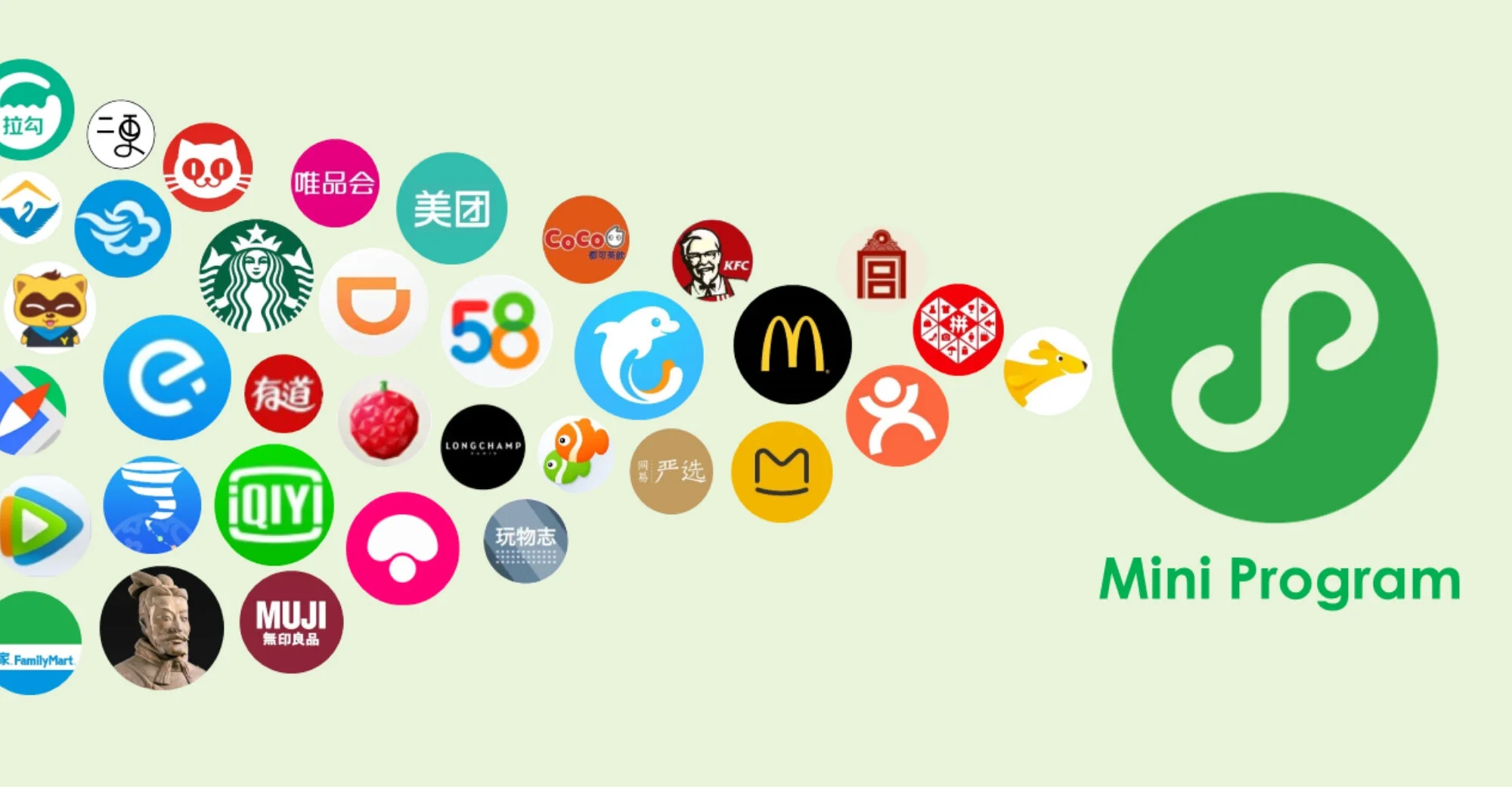
Tencent has been criticised for the impact of its games on minors, threatening its major profit pool. A key assumption I hold is that it can earn an offsetting strategy credit by re-investing profits from games into its enterprise business, assisting Chinese companies raise their productivity through greater digitisation, and thereby improving their competitiveness and ability to pay higher wages. And while I can’t practically test this assumption, I can say that the more I read into Tencent’s enterprise business, the more promising it looks to me.
The need is certainly real: China materially lags the US in terms of IT spending. It’s hard to get a reliable, apples for apples comparison but from sources I found online, China spent an estimated USD315bn on IT in 2020, equal to ~2% of its GDP; whereas the US spent an estimated USD1.8tn, equal to ~8% of its GDP. And according to estimates from IDC (as quoted by Alibaba Cloud), US spending on Public Cloud services in 2020 was more than 9x China’s. Moreover, US enterprises spent an estimated ~25x more on SaaS than their Chinese peers. And the productivity gains from SaaS appear to be only accelerating as we move into the API economy.
There are many reasons for China’s low-level of spending on IT. On the supply-side, it’s notable that China does not have any big domestic enterprise software companies. Piracy has in all likelihood reduced customers’ willingness to pay and been a major disincentive to investment. Analyst Wang Hailong writes too that Chinese firms don’t seem to be able to grow beyond industry niches. On the demand-side, he also observes that SOEs prefer to build in-house, regardless of cost or efficiency. Ma Peng from Alibaba Cloud argues that survival is hard enough for most Chinese businesses before even contemplating the distant returns from IT spending. In addition, labour is cheap enough that it’s often easier to throw more people at a problem than to invest in a technical solution. Digital infrastructure is still not as built out as in the US. And the need for software solutions is less in secondary industries, which still comprise the largest part of China’s economy.
Which all leaves an opportunity for a company like Tencent to take a longer term view (i.e. to shoulder losses) to develop the market. This isn’t just national service though; Tencent regards its shift from the consumer internet (“2C”) to the industrial internet (“2B”) as both a blue ocean opportunity and a strategic imperative. Tencent Founder and CEO Pony Ma laid out his rationale and strategy in an open letter published in October 2018 (my translation):
(Note that ‘industrial internet’ here refers to the digitisation of society and enterprises in a broad sense (产业互联网); not factories etc. in a narrow sense (工业互联网).
We believe that the first half of the mobile internet is coming to an end and that the second half is about to kick off. Following the process of digitalisation, the battleground is moving from the consumer internet to the industrial internet. Tencent has always said that we focus on connections, hoping to connect people with people; people with things; and people with services. We increasingly realise though that aside from establishing connections between ‘people and people’, it is hard to iterate connections between ‘people and things’ and ‘people and services’ when a large number of ‘things’ and ‘services’ cannot be thoroughly digitised. To allow individual users to obtain better products and services, we must fully integrate the internet with all walks of life, embed digital innovation into the core of manufacturing and advance digitisation into every link of the supply chain. The consumer internet will never realise its true potential without the support of the industrial internet.
Tencent’s President Martin Lau elaborated on the company’s 3Q18 earnings call:
We believe we are uniquely positioned to help businesses to embrace the industrial Internet because, firstly, we host over 1 billion users across our social and other high-traffic platforms and are now connecting these users to industries. Secondly, our enterprise services, such as Mini Programs, Official Accounts, WeChat Work and Weixin Pay, facilitate communications between consumers and industries and the completion of transactions. Thirdly, using our advanced technologies in cloud computing, AI, security, LBS, et cetera, we help industries to aggregate their data and unlock the value in their data. Last but not least, together with our strategic partners, we have cultivated a thriving Internet ecosystem, which provides broad industry knowledge, insights, deep consumer understanding, as well as enabling powerful consumer-specific solutions.
In other words, consumer facing businesses will digitise to better connect with their customers - through WeChat and its associated touch points, of course - and in the course of doing so, they will pull their whole supply chains to digitise too. This is what Tencent calls a “C2B2B” model of digitisation, which differs from the experience in the West where large enterprises led their own investments in IT.
In fact, this model was first conceived by Alibaba and shaped its strategy to expand its services in response to merchant pain points, as I described in my post earlier this year and articulated by Alibaba Chief Strategy Officer Zeng Ming in his book “Smart Business”. Alibaba launched Alibaba Cloud in 2009 and now has a commanding lead in China with strong relationships with both businesses and local governments.
Fearing it would be boxed out, Tencent underwent a major internal re-organisation in 2018, creating the Cloud and Smart Industries Group (CSIG) to consolidate its patchwork of 2B efforts under common leadership. Veteran Tencent Vice President Dowson Tong heads the CSIG and co-edited a book published last year titled “The Industrial Internet’s Chinese Path” which sets out the C2B2B model’s intellectual underpinnings and challenges. It’s mostly academic and there are only a handful of practical case studies, which is indicative of how early Tencent is in its journey. My favourite chapter was by analyst Chen Yongwei, in which he explains how Tencent’s roots as a consumer internet company serendipitously led it to what he thinks is the best approach to China’s 2B market: an open design architecture and modular tools which can be applied across heterogeneous business contexts (my translation):
We can take Tencent's "Smart Retail" as an example to illustrate how the digitisation of the retail industry is achieved through modular solutions. Because Tencent has relatively little experience in retail, it choose the role of a tool or an assistant rather than getting too involved. As the designer, it chose to retain relatively few functions for itself and to keep the ‘visible design rules’ as simple as possible to give more design choices to the retailer. In designing its architecture, Tencent provides many practical tools including Tencent Cloud, Mini-programs, Official Accounts, mobile payments, social ads and pan-entertainment IP. These tools can be used in many different contexts. Retailers can call these tools through Tencent’s interface before a sale, during a sale or after a sale. Of course, retailers decide when they use these tools and which tools they use, leaving them to create solutions matching their specific needs.
In fact, with the same design arcitecture and tools, different retailers have come up with completely different results. For example, some retailers have used Tencent’s development platform to design Mini-programs for customer acquisition, thereby greatly increasing their traffic; others have used Tencent Cloud and Mini-programs to record and analyse transaction data, and then to re-engineer their sales process; others still have used Tencent Cloud’s AI services to re-deploy their offline footprint. In sum, under this design system, these modular tools have rapidly innovated and evolved, greatly adding to the vitality of the entire retail ecosystem.
When many service providers mention the industrial internet, they will talk about providing complete solutions. But these will inevitably encounter [difficulties with scale and cost]. In contrast, Tencent has opted not to go too deep into any vertical but instead to make tools and serve as an assistant. It only offers general designs and modules, leaving the choice of how to use and combine those modules to its customers. Due to its strong 2C genes, Tencents modules are well suited to address consumer pain points. And with these designs and tools, operators in specific industries can easily construct overall solutions themselves for their own specific needs.
Among everything Tencent has to offer, it’s worth emphasising the power of Mini-programs because they are such a powerful draw into the WeChat ecosystem. Per Matthew Brennan, Co-Founder and MD of China Channel, “there’s simply no faster, more flexible way to build digital services and have them reach customers where they already are - in WeChat”. According to Questmobile, there were more than three million WeChat Mini-programs in December 2020 and 863m monthly active users. Users used an average of 5.6 Mini-programs each and the most popular categories were life services, mobile commerce and utilities. Critically, Mini-programs can be integrated with WeChat’s other tools to close the loop on the consumer journey. And unlike anything Alibaba can offer, WeChat’s core messaging function offers a way to build one-to-one, direct connections with consumers which are not intermediated by a third party platform (which is known as “private traffic”). For these reasons, marketing consultant Clement Ledormeur says, “more and more brands consider their Mini-programs more important than their brand site”.
Tracking the financial progress of Tencent’s 2B efforts is hard because they cross over its business segments. For example, an enterprise customer might build a Mini-program but then only pay Tencent for Advertising, not Cloud Services. CSIG’s financial progress is also kept deliberately opaque by reporting its revenues together with Fintech as the ‘Fintech & Business Solutions’ segment, where I presume it is the minority. All we know therefore is that from when disclosure began for this segment in 1Q18 to the most recent quarter in 2Q21, its revenues grew from RMB15.2bn to RMB41.9bn, rising from 21% of Tencent’s total revenue to 30%, leaving it poised to overtake Online Games as Tencent’s largest revenue generator. We also know that its gross margin is much lower than other segments - 32% in 2Q21 vs. 45% overall - and that it comprised just 21% of overall gross profits.
Management have offered qualitative colour on earnings calls, reminding us regularly that 2B is a long-term investment being made as much for its own reward as to add to the vitality of Tencent’s overall ecosystem. It seems the learning curve was steep and many of the early showcase projects to win new business didn’t scale well. As Google learned with Google Cloud, 2B requires a wholly different business model and organisational structure from 2C. Enterprise products don’t just sell themselves; sales cycles are long and customers require dedicated account managers. And management have made clear that Tencent is butting against the same impediments which have to date kept IT spending so low in China; per Martin Lau, many customers don’t yet see Cloud’s business case; many can’t overcome their own inertia; and many don’t have the internal IT resources to implement cloud solutions anyway.
CSIG seems to have evolved and iterated quickly though. It has recruited a small army of independent software vendors to expand its reach and launched a marketplace for vertical-specific SaaS solutions. Its own headcount has grown from less than one hundred staff to more than ten thousand as of May this year. And it has formed eight vertical groups to tailor pitches to specific industries. And while COVID delayed many new deals for infrastructure, it also catalysed many new customers to come onboard - not because they were rushing to find customers on WeChat but because their own employees turned to Tencent’s SaaS apps like Tencent Meetings and Tencent Docs to work remotely during lockdowns. These 2C-like SaaS applications are an entry point which plays to Tencent’s strengths and differentiates it from Alibaba Cloud’s focus on IaaS and PaaS. As Tencent’s Chief Strategy Officer & Senior Executive Vice President James Mitchell said on the 1Q21 earnings call:
The path to long-term economic returns in cloud is not to get big fast on infrastructure, but actually to cultivate platform as a service and software as a service and that's something that we've been doing now for several years. Platform as a service in particular is a substantial percentage of our total cloud revenues now and that's important underlying reason why we believe that we're able to outgrow the industry in the first quarter this year.
This momentum carried on into 2Q21. Again from James Mitchell:
Within cloud, we saw very rapid, very substantially above-market growth in infrastructure as a service, and then, more rapid growth platform-as-a-service and software-as-a-service. And that translated into the margin where, as John mentioned, the gross margin for cloud improved year-on-year. That's not because we're at the stage of focusing on margin optimization yet, rather it's because there was a gentle mix shift from infrastructure-as-a-service toward platform-as-a-service and software-as-a-service. So we're still focused on maximizing client penetration and growing our market share and helping industries digitize rather than on profitability. But the gross profit margin did improve notably year-on-year for Business Services because of the mix shift to PaaS and SaaS.
And then:
When we look at our enterprise initiatives, the fact that our Business Services revenue growth accelerated so sharply, the fact that we are seeing very strong user growth for Tencent Docs and for WeCom and for Tencent Meeting, you give us a degree of confidence that we're moving in the right direction… And we firmly believe that if you look at our enterprise software suite, we have the products, the analogues of Zoom and Shopify, and arguably Microsoft Office in China, which is a very good place to be.
This post set out to make explicit a key assumption for investing in Tencent and then to explore whether Tencent’s 2B investments in 2B are more than just national service. The degree to which Tencent will be targeted by regulations is impossible to answer but I’m prepared to bet the odds are acceptably low. And I’ve come away feeling optimistic about its 2B business, though the road will be long and difficult. It’s perhaps apt therefore to finish with this quote from Dowson Tong (my translation):
Actually, Tencent has its own business logic: if we are sure about a market opportunity and can see its long-term value, we will often be the company that persists until it’s the last man standing.
Further Reading/listening:
The story of Tencent’s 2018 930 re-organisation which created CSIG
Ma Peng from Alibaba Cloud’s article “A Comparison of the Cloud Computing Market between China and the United States”
Wang Hailong’s comparison of listed American and Chinese software companies (h/t to Rui Ma for sharing)
Passluo’s Tweet thread on why China’s Tech giants struggle with 2B (h/t to Lilian Li for sharing)
Dowson Tong’s May 2021 speech to the China Industrial Internet Summer Summit
“The Industrial Internet’s Chinese Path”, edited by Dowson Tong and Zhu Hengyuan
“Tencent’s Road to the Industrial Internet” by Chen Yongwei (probably the best chapter in Dowson Tong’s book)
Tech Buzz China’s podcast on WeChat Mini-programs
Lilian Li’s article “Why are there no massive Chinese SaaS companies?”
EqualOcean on the differences between Tencent Cloud and Alibaba Cloud
Gartner’s Peer Review ‘Alibaba Cloud vs. Tencent Cloud’
“Huawei’s Plan to Snatch Alibaba’s Cloud Crown” by Nikkei Asia
Fabernovel and 31Ten’s Wechat Mini-program Bible
Daxue Consulting’s ‘WeChat Mini-programs 2020 Report’
The WeChat wiki (lots of resources but getting dated)
Alibaba Chief Strategy Officer Zeng Ming’s summary of his “Smart Business” thesis
China Tech Investor’s interview with Kendra Schaeffer on the blizzard of recent regulations
Tencent’s press release on its ‘Go Yunnan’ project
Analyst Dan Wang’s 2020 Letter, in which he presciently questions the halo around Consumer Tech
Tencent President Martin Lau’s comments on Tencent Cloud’s key challenges:
From Tencent’s 4Q20 earnings call:
“Okay, I'll take the second question with respect to the key challenges Tencent Cloud is facing in penetrating enterprises. I would say, the number one challenge is really the business reason for them to adopt cloud solutions and that is actually sort of a lot of times the most important question. They may give you the fact that, you are maybe expensive, they may give you, there is no time, and all these other reasons. But the fundamental reason is, okay, what is the key business proposition for converting themselves into a cloud service.
“And I think the evolution of the mobile Internet has really sort of continuously provided this kind of key reason, the key business proposition because when the customers of the businesses get online and increasingly engaged online, then the businesses have to go online and the businesses -- when the businesses go online, they suppliers have to go online. So there is a chain reaction that's happening initially pretty slowly. But now with increasing speed, especially it's accelerated by the pandemic. In the past, when retailers look at e-commerce, it's a nice to have. It's an additional business. But during the pandemic, they realized, it's actually a must have. So -- but having the business proposition for them to move online and to adopt cloud solutions, I think that's number one.
“Number two is really the inertia, especially more on the organizational inertia, all the businesses have their existing practices and suddenly you say, you have to move online. Yes, it's more efficient. Yes, it's more cost effective over time, but it involves the change of behavior of lot of internal procedures and people's behavior. And I think in order to overcome that, the number one reason has to be very strong**. And at the same time, when we actually can create examples and role models through which a certain case have been created within the industry, then it's much easier to replicate that case in other clients. So that's exactly what we're doing. We're trying to create the role models and then trying to make them into a more common set of solution and then populated to other players within the industry.
“The third one is about IT resources within those enterprises. And that's the reason why we have been working with lot of ISVs and system integrators so that they can actually help the companies. Once they have the key reason and value proposition to move online and at the same time, they have a clear blueprint to do that, then the IT resources actually they can find in the third-party world. And I think that's addressing one set of issues.
“The other set is about Tencent Cloud, in particular. As a challenger, I think we do face many challenges right now and we are tackling them one-by-one. The first one being just building relationship with enterprises, that's not easy and we have been making good traction in the year of 2018-19, especially after our organizational upgrade, but it was actually interrupted during the pandemic, because during the pandemic, it's very hard to build new relationships and even though you have signed new contracts, it's hard to implement. So that's the reason why our cloud growth was a little bit impacted in the first half and the third quarter of last year, but then as the world returned to normal, we have seen that the relationships and the implementing projects are back on track and as a result, our growth rate in the fourth quarter on the cloud business is much stronger now.
“And the other thing is just sort of continuously building up our technology so that our product is actually competitive, our cost is competitive. And that's the reason why we have invested in a lot of the new technologies such as AMD servers, such as our T-block architecture, so that we can make our solutions cost competitive.
“And I would say, finally, Tencent has got a lot of SaaS solutions on the communications and productivity side which are market leading. And in the future when we can actually connect our cloud service with these SaaS solutions, I think that's the time when we can really leverage our competitive advantage and overcome a lot of these challenges.”
Disclosure: Longriver Investment Partners Limited manages the Longriver Partners Fund and separately managed accounts. These portfolios may hold or trade securities discussed in this article, and their holdings may change without notice.