Hedge Fund Alpha Interview

I recently spoke with Hedge Fund Alpha for its Q2 2026 edition of Hidden Value Stocks. The interview includes an update on Longriver, but the part I expect will be of most interest to readers is the pair of company case studies: Hikari Tsushin in Japan and Plover Bay in Hong Kong. For compliance reasons, we agreed to frame these as examples of my process rather than stock tips.
Hikari has built a distribution platform to sell subscription-like products and services with recurring cash flows, like bottled water, small-ticket insurance and utilities. But over time, it has also built an admirable track record investing surplus cash in other companies, either outright or through their listed securities. What interested me was how the whole organisation seems built around disciplined capital allocation, an enduring quality that’s hard to compress into research notes or Excel.
Plover Bay is similar. At first glance, it looks like a small hardware company. But that misses the point. It is a disciplined, founder-led, high-return, asset-light business solving a real connectivity problem, with a growing software and recurring-revenue layer that the market was slow to appreciate.
These two case studies capture much of what I look for in Asia and around the world: good businesses, sensible stewards, and situations where the label attached to the company is too narrow for the economics beneath.
With Hedge Fund Alpha’s permission, I am reproducing the case studies below. For the full interview, including the broader discussion of Longriver and the rest of the issue, I would encourage you to subscribe to Hedge Fund Alpha and read it in full here (link). A big thanks to Michelle, Jacob and the team at Hedge Fund Alpha for having me!
Hikari Tsushin
For readers who may not know the company, what does Hikari actually do?
The company’s most important asset is a distribution network built over almost 40 years, first in the 1980s as a small operation selling office equipment to SMEs, then during the mobile phone boom of the 1990s as an outsourced sales channel for NTT, and more recently to cross-sell a wide range of recurring products and services owned and designed by Hikari itself. These include electricity, insurance, broadband, bottled water, and even craft beer.
The common denominator is that these products and services are designed around monthly contracts and recurring usage, which means management can estimate future cash flows with a reasonable degree of confidence. That matters because Hikari is not trying to maximise revenue for its own sake. It is trying to maximise the return on the capital it puts behind customer acquisition. That is the key to the whole business. In some ways, Hikari’s framework was a precursor to how good software companies think about lifetime value against acquisition cost, except that Hikari applies this logic to recurring real-world services.
In practice, that means it makes assumptions about churn and margin, works out what an average customer relationship is worth over time, and then spends only up to a hurdle rate that implies a strong return. Specifically, they have said that they want to double their money in five years, which implies a roughly 15% IRR. And so that capital allocation discipline is not just a head-office exercise. It is infused into how the company operates day to day.
The twist is that, at some point, Hikari realised it could apply the same capital allocation discipline to investments in other companies, too. So, in addition to the core operating business, it now has a portfolio of investments in Japanese and foreign stocks with a gross market value of ¥1.45 trillion, equivalent to 78% of its current market cap.
Can you walk us through Hikari Tsushin as an example of your investment process?
Hikari is a good example of the kind of business I am drawn to: a simple economic core, a strong capital allocator, and a structure the market initially finds harder to understand than it should. At heart, Hikari is a distribution business for recurring products and services, married to a large internal investment portfolio. What ties it together is capital allocation.
I bought shares during the panic in Japan in August 2024. Stripping out the investment portfolio, Hikari was trading at roughly 3x trailing earnings. That obviously got my attention. But what made it interesting was not just that it was cheap. It was that the business had actually created value over a long period of time. Over the prior decade, operating profit had compounded at about 11% per annum, while book value and dividends per share had compounded much faster, helped by the investment book.
So to me, this was not just a messy sum-of-the-parts story. It was a real operating business run by people who understand how to allocate capital, with an additional balance-sheet engine sitting on top of it. That combination is rare.
How did the company become what it is today?
Hikari was founded in 1988 by Yasumitsu Shigeta after telecom deregulation in Japan. It first made its name as a distributor of telecom equipment and mobile phones. The founder had the foresight to build a detailed client database early on, which later made it much easier to cross-sell other services. That turned out to be a very important asset.
The more interesting part of the story, though, is that Hikari went through a very severe crisis around the dotcom boom and bust. At one point, Shigeta was briefly one of the richest people on earth, the company was expanding aggressively, and the whole thing had become far too loose. Then it all unwound. The stock collapsed, the company suffered badly, and management was forced to rebuild from a much sounder base.
That experience matters. It explains why the company today feels much more disciplined, much more conscious of balance-sheet risk, and much more focused on recurring income and returns on capital. In a sense, the current Hikari is the product of a hard lesson learned the expensive way.
I pay attention to that. I generally prefer businesses and managers who have already been through a proper test. Hikari has.
What changed to make the shares more investable?
The numbers had been interesting for a while, but the disclosure had not been good enough. That changed, apparently because the company realised that the disclosure had to get better to narrow the discount between the stock price and their estimate of fair value.
And so in recent years, Hikari has been doing a much better job of explaining what it is, how it allocates capital, and how the operating business and investment portfolio fit together. That may sound minor, but for a company like this, it’s crucial. Imagine trying to understand Berkshire without Buffett’s letters. If the structure looks complicated and management does not explain it well, the market will usually default to a discount.
That is part of why it became especially interesting to me in 2024. The business itself was already strong, but the narrative around it was improving. The market was starting to get a clearer picture of what management was actually doing. Then the August panic in Japan let me look at it at a price that still seemed to treat it like a confusing structure rather than a capable capital allocator.
What was the key insight that made the business click for you?
The key insight was that good capital allocation is in Hikari’s DNA because it has to be. A lot of companies talk about capital allocation as if it were a once-a-year boardroom topic. At Hikari, it is part of the daily operating model.
If you are constantly deciding how much to spend to acquire customers for products like electricity, insurance or water delivery, and if your returns depend on getting that right over time, then you are training the organisation to think rationally about capital every day. That is very different from a company that stumbles into good capital allocation only when it happens to have excess cash.
That is also why I found Hikari much more interesting than the average discounted conglomerate or holding company. The parts here belong together. The operating businesses generate cash. Management then decides, through the same returns lens, whether that cash should go into more customer acquisition, new products, acquisitions, listed securities, buybacks or dividends. That decision-making process is really the business.
Where does the investment portfolio fit in?
The investment portfolio is central to the case. It is not just a pile of excess cash sitting passively on the balance sheet. It is a second engine of compounding, and it has become more important, not less, as Hikari has matured. Management says the portfolio has earned a pre-tax IRR of 18% over the past eight years. By 3Q FY2026, the portfolio had an acquisition cost of ¥831.9 billion and a market value of ¥1.45 trillion, as I mentioned earlier. Look-through earnings at cost over the last twelve months were ¥136.7 billion, implying a 16.4% earnings yield.
What I find especially interesting is that this is no longer just a handful of opportunistic positions sitting beside the operating business. The listed affiliate network has widened to 43 publicly listed equity-method affiliates, and you can see that management has been leaning harder into listed investments as the opportunity set has opened up.
As an aside, there is a cultural element here that I find telling. After Hikari’s fall from grace following the dotcom bubble, management made a trip to Omaha for the Berkshire Hathaway Annual General Meeting. They seem to have absorbed the best of Berkshire’s ethos and even made an investment in Berkshire stock. Today, Berkshire remains their largest overseas holding, and they tell me they are a top-20 shareholder.
That is why I have never thought Hikari should be valued simply on near-term P/E. It is part operating company and part internal investment vehicle. If you focus only on reported earnings, you miss too much of what is happening economically. A meaningful share of value creation still flows through book value and comprehensive income rather than a neat, linear earnings stream.
There is also a broader point here. I have been interested for some time in how improving governance and capital allocation are changing corporate Japan. Hikari is one way to study that. It is not just one operating company. It is also a management team that can reinvest cash into other Japanese businesses as opportunities arise.
Can you give a concrete example of how Hikari creates value in the core business?
The electricity business is probably the best example. It barely existed a decade ago, but is now the largest contributor to Hikari’s operating profit.
The opportunity came from deregulation. Hikari already had relationships with a large number of SME customers, so it was in a good position to cross-sell electricity into an existing network. Management started there rather than charging straight into the most crowded parts of the residential market. That was sensible. It played to the company’s strengths and let it scale into a new vertical in a measured way.
That pattern tells you a lot about how Hikari behaves. It does not need to make heroic bets. It can use its distribution network to test adjacent opportunities, spend against them where the economics are attractive, and then scale once the returns prove out. That is what good capital allocation looks like in practice.
What did you learn from meeting the company?
Visiting Hikari’s office in an out-of-the-way part of suburban Tokyo gave me just as much insight as any conversation or other research.
They are frugal. The offices were modest. There was no sense of excess. You could feel that management takes seriously the idea that discipline should start with itself. That may sound trivial, but it is often not.
I also found the team unusually candid. And the culture felt meritocratic rather than ceremonial. Those are soft observations, obviously, but they matter when you are judging whether a management team’s stated philosophy is real or just presentation material.
In Hikari’s case, the operating discipline, the capital-allocation record and the culture all seemed to line up.
What were the main risks?
The first risk is that Hikari sits in the middle of the value chain. In many of its businesses, it owns distribution and the customer relationship, but not always the underlying product. Over time, bargaining power could shift toward landlords, property managers, utilities, insurers or other channel owners. That would show up through lower unit economics or higher acquisition costs.
The second risk is reinvestment risk. This is the central challenge for all great capital allocators. As they get larger, it becomes harder to reinvest incremental capital at the same high rates as before. Hikari has more optionality than most because it has a large distribution network, a cash-generative operating business and an investment portfolio, but it still will not be a straight line.
The third risk is that the balance sheet and investment portfolio add some volatility to reported results and book value. Hikari has also benefited from a few tailwinds in recent years, including the rerating of Japanese smaller companies and access to cheap yen funding. You should not assume every tailwind continues forever.
Why is Hikari such a useful example of how you invest?
Because it brings together several things I care about.
First, it is a business where capital allocation is not an afterthought. It is built into the way the company operates. Second, it shows how I like to look through a superficially messy structure to find the unifying economic logic underneath. Third, it is a case where improved disclosure helped narrow the gap between price and value, but only after the business had already done the hard work of creating value.
More broadly, Hikari is exactly the sort of case where a coherent business model, disciplined stewardship and a long-term mindset matter more than whether the company fits neatly into a style box. It is not neat in an accounting sense, and it is not easy to capture in a single multiple, but that is precisely why it was interesting.
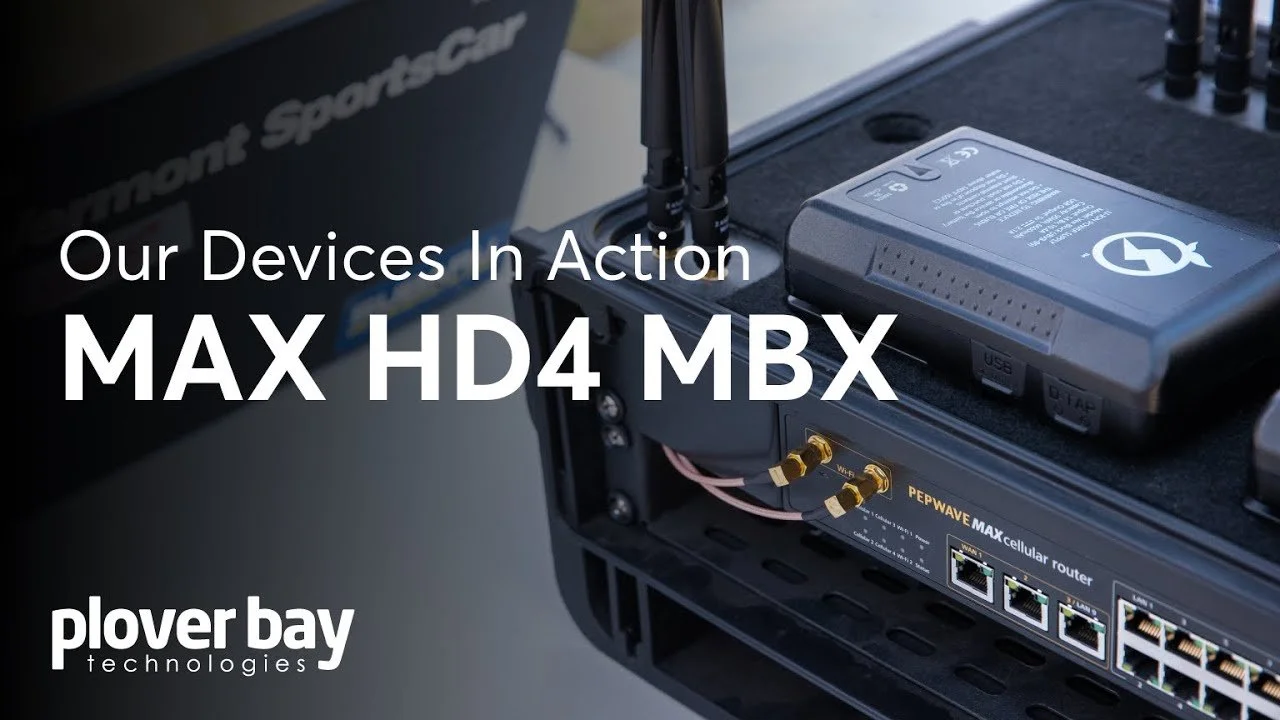
Plover Bay Technologies
What does Plover Bay actually do?
Plover Bay solves a boring but increasingly important problem: keeping devices and workflows connected when real-world networks fail, stutter or degrade. Its products combine fixed, mobile and increasingly satellite links into one resilient connection, so traffic keeps flowing even if one link drops. SpeedFusion is the core of that. It makes multiple links behave like one pipe. InControl is the cloud layer that lets customers deploy, monitor and troubleshoot fleets remotely.
In plain English, Plover Bay turns unreliable connectivity into something much more dependable, then gives customers a simple way to manage it at scale. That matters because many of the use cases are messy, distributed and expensive to service in person. A van roll can become a few clicks. A remote site can stay up even when one connection fails. A vehicle, vessel or emergency services deployment can keep operating in conditions where a single-link setup would struggle.
The revenue mix also shows that this is broader than a simple hardware story. In 2025, the company generated $17.7 million from Fixed First Connectivity, $73.1 million from Mobile First Connectivity, $28.4 million from warranty and support services, and $10.9 million from software licences. So hardware matters, but it is not the whole business.
How did you first come across Plover Bay, and what made you take it seriously?
The first spark came from my network. A friend in the value investing club I helped build gave a presentation on the company, and it immediately struck me as the sort of idea public markets often misclassify. That matters to me because one of the real advantages in investing is not just what you can model yourself, but the quality of people around you who can surface things worth studying before the market has fully understood them.
What took it from interesting to something worth serious work was meeting the founder. I came away very impressed by both the man and the story. His first venture had failed, and he had clearly thought very hard about why. He seemed to have built Plover Bay as the opposite of that earlier mistake. He kept fixed costs low by outsourcing production and sales. He avoided outside private equity with misaligned incentives. He kept family out of the business. Over time, as more proof points accumulated, I became convinced that he had built the business in a way that was both good business and treated outside shareholders fairly.
What was the original analytical case?
The original case was that the market was misclassifying the business. It saw a niche hardware vendor. I thought that was too narrow. What I saw was a connectivity platform with hardware, software and an installed base that could deepen in value over time.
That distinction matters. Hardware is how the product gets deployed, but the real value lies in the system-level know-how, the software layer, the partner ecosystem and the installed base that can be monetised over time. Management now more or less says the same thing in public: the company is not a conventional hardware business and not a pure SaaS business either, but something in between. That “in-between” position is exactly what makes it interesting.
It also helped that after the April 2025 sell-off, the valuation still looked too low to me. The market still seemed to be describing it too narrowly for the business I thought it was. That was the gap I was focused on.
Why is this not commodity hardware?
Because customers are not really buying a generic box. They are buying uptime.
The best way I know to describe the moat is that the enemy here is not “bad design” but physics: interference, congestion, hand-offs and unreliable last-mile links. Plover Bay treats that chaos as a systems problem. It uses multiple links, intelligent traffic steering and remote management to make bad environments behave better. That is why I think the business is better understood as reliable performance in messy, high-stakes environments than as “specialised hardware.”
A more vivid version of the same point came from one integrator, who said reliability was the reason they switched customers from Cradlepoint to Peplink. That stuck with me because it says more than most polished investor language.
There is also discipline in how the company thinks about product. It has not tried to become a “me-too” vendor chasing every headline. It has stayed focused on reliable connectivity in difficult conditions. That sounds simple, but it is strategically important. It keeps the product close to the real problem that customers are paying to solve.
Why do edge computing and Starlink matter?
Because this is where the case becomes more than a good router business. The number of compute-intensive edge devices is growing rapidly, and many of them will be running real-world, mission-critical workflows. Management’s latest public framing is unusually strong here. Autonomous systems, teleoperation and AI-driven infrastructure all require unbreakable connectivity. In the latest annual disclosure, the company points to a teledriving deployment in Las Vegas where its routers bond multiple 5G connections to keep remote video and vehicle controls running in real time.
That is the most important reason the case remains interesting. The opportunity is not just that more devices need routers. It is that more edge devices now need highly reliable connectivity in the real world. As the box gets smaller and smarter, and as connected devices multiply, the addressable market expands with it.
Starlink fits naturally into that broader shift. It matters, but not mainly because reselling terminals is a great business. The better way to think about it is as an ecosystem accelerant and a validation of Plover Bay’s technical relevance.
The relationship is interesting partly because of how it began. Starlink approached Plover Bay after a partner used Peplink routers to fix a global cruise line’s onboard Wi-Fi. That led to deeper integration, and by January 2024, Starlink had named Peplink its first Authorised Technology Provider. In other words, Starlink did not create Plover Bay’s moat. It validated it, then broadened the set of deployments in which that moat matters.
That is important because the value is not just in moving terminals. It is in making satellite deployments more usable, manageable and reliable, then pulling Peplink hardware and software through with them. Public company materials now show Starlink being used alongside Peplink in settings such as cruise connectivity, wildfire response and rural emergency communications. That is more interesting than simply clipping a resale margin.
What has recent evidence shown?
The recent evidence has broadly supported the case. In 2025, revenue rose 11.4% to $130.1 million, profit attributable to shareholders rose 19.5% to $45.5 million, and diluted EPS rose 19.1% to 4.11 cents. The company finished the year with no bank debt, $56.3 million of cash and $8.8 million of time deposits.
The quality of those numbers is at least as important as the growth itself. On the latest earnings call, management said hardware gross margin was now about 41%, recurring-revenue margin was over 90%, and the two contributed roughly half of gross profit each. That is a better economic mix than people usually assume when they hear “hardware company.”
Geographically, the business is broadening too. North America remains the largest region, but growth outside North America was much stronger in 2025. EMEA rose to $37.1 million from $29.1 million, and Asia rose to $11.9 million from $8.8 million. That matters because it makes the business look less like a one-region story and more like a platform with multiple demand drivers across end-markets and geographies.
What makes the business model better than it first appears?
The key point is that the hardware sale is only the beginning. Hardware gets the device into the field. Software, support and subscriptions deepen the relationship and improve the economics over time.
That is why recurring revenue matters so much. By year-end 2025, recurring revenue was $37.6 million, or 28.9% of sales. Subscription take-up had risen to 38.6% from 34.2%, and contract liabilities had reached $38.5 million. That is concrete evidence of a growing recurring base.
One reason this matters is that, unlike a pure SaaS company, Plover Bay does not need to spend heavily to acquire subscribers from scratch. The hardware is already in the customer’s network, already doing useful work every day. The installed base is the foundation of the subscription business. As take-up rises, the economics improve without the company needing to build a bloated sales machine.
That operating discipline also shows up in culture and capital allocation. It remains an owner-operated, high-return and asset-light business. The founder remains the majority owner, products are designed in-house and built by contract manufacturers, and surplus cash is returned rather than wasted on empire-building.
What does the spin-off tell you?
Just for context, Plover Bay announced earlier this year that it will spin off its North American operations into a separate company, which will be listed on the NASDAQ, leaving the legacy Hong Kong-listed company to own and operate its businesses in Europe, Asia and the rest of the world. Existing shareholders would receive shares in both entities through a distribution in specie.
The formal details and timeline haven’t been announced yet, but I think the spin-off tells you that management understands the geopolitical constraints. The public framing is that North America and the rest of the world increasingly require different certifications, supply chains, component choices and go-to-market approaches. More than 58% of revenue now comes from North America, and management argues that separating the businesses will allow each side to move faster and pursue the right local strategy, especially as more business comes from public authorities.
What interests me is that this feels less like financial engineering and more like a practical response to the world as it is. The North American business increasingly wants one operating wrapper, while the rest of the world wants another. That strikes me as a strategic decision, not just a valuation exercise.
If I could change one thing about the company, it would be to give the North American business a cleaner geopolitical wrapper and a more suitable listing venue. The spin-off looks like a meaningful step in that direction.
What are the real risks, and what would change your mind?
The risks are real. Competition is one. Technical change is another. Product sprawl, supply-chain disruption and trade-policy shocks can all matter. The company’s own disclosures are sensible on this point. One customer accounted for $31.7 million of 2025 revenue, and the business is still exposed to uncertainty around inventories, customer ordering patterns and supply chains.
This is also still a real-world business, not an abstract software story. Tariffs and component costs matter. Standards can change. A box that excels today can look dated if firmware, orchestration or supporting products fall behind. Those are not trivial risks.
What would change my mind is not a bad quarter. It would be evidence that the system-level moat is weaker than I think, or that the installed base is not monetizing the way it should. If subscription attachment stalls, if the product starts losing its reputation in the hardest deployments, or if the spin-off adds more friction than strategic freedom, the case would look different.
The market initially saw a small hardware company. I thought it was better understood as a focused, founder-built connectivity platform with better economics, a stronger moat and more room to grow than the label implied.
Disclosure: Longriver Investment Partners Limited manages the Longriver Partners Fund and separately managed accounts. These portfolios may hold or trade securities discussed in this article, and their holdings may change without notice.